A successful treatment page converts anxious visitors into booked patients. You achieve this by combining empathetic symptom mapping with rigorous technical SEO, ensuring your clinic outranks competitors without violating local medical advertising guidelines.
Key Takeaways
- Symptom mapping connects natural patient search queries directly to your clinical solutions.
- High-resolution before-and-after galleries require next-generation image formats to maintain optimal page speed.
- Injecting specific Latent Semantic Indexing (LSI) keywords builds essential topical authority for medical algorithms.
- Clear recovery timelines and medical disclaimers satisfy both user intent and Ministry of Health (MOH) compliance.
The Anatomy of a High-Converting Treatment Page
A high-performing aesthetic clinic copywriting strategy relies on structure. When prospective patients land on your treatment page, they need immediate reassurance. Your content must clearly state the procedure name, the exact symptoms it treats, and the expected clinical outcomes.
We structure these pages by addressing the patient’s pain point first, followed by the technical solution. Failing to connect the medical terminology with the patient’s actual problem leads to high bounce rates. A patient might not know they need “radiofrequency microneedling”, but they know they want to treat “deep acne scars”.
Q: How do I ensure my treatment page converts visitors?
A: Focus on clear symptom mapping, transparent recovery timelines, and professional clinical credibility. Ulement designs medical service pages that prioritise patient trust and immediate lead generation.
How Do You Map Symptoms to Search Intent?
Search intent dictates how you should structure your headings. Informational searches require educational content, while commercial investigation searches require clear comparisons. Patients often search using symptom-based long-tail keywords rather than specific procedure names.
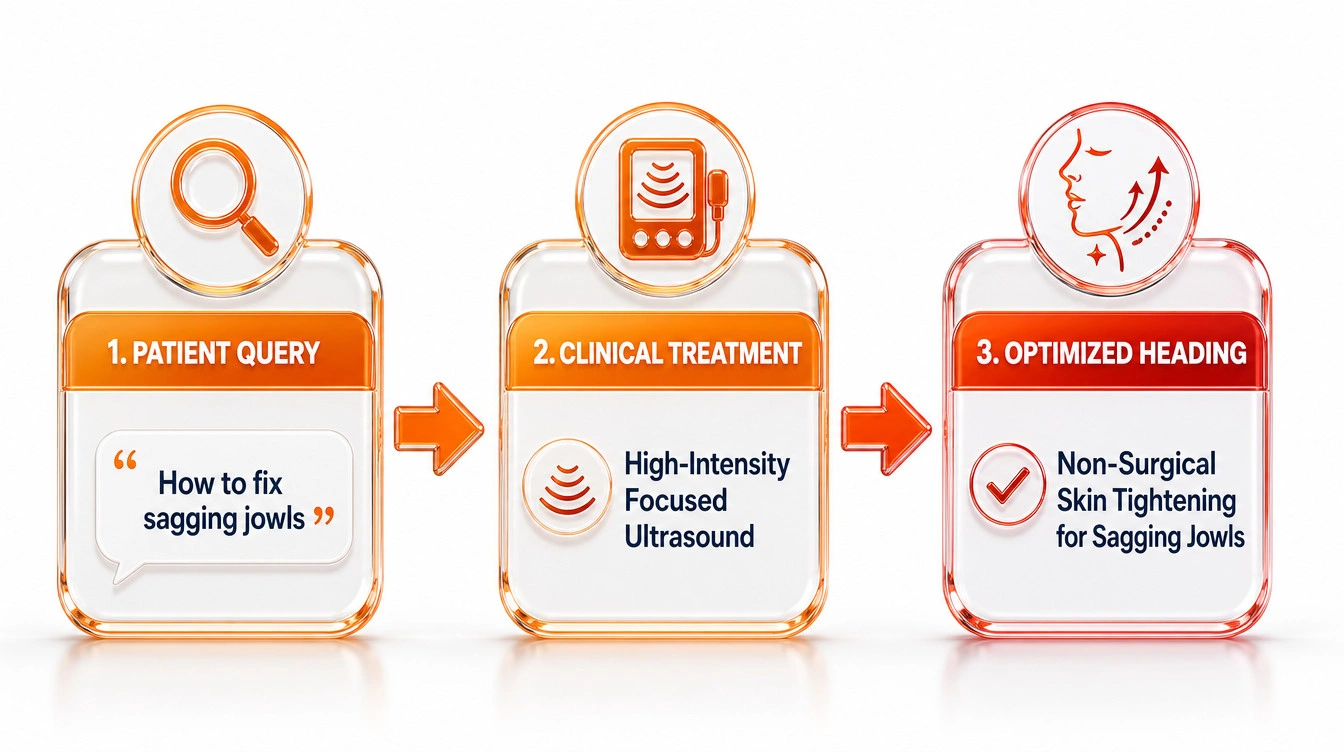
By mapping symptoms to treatments, you capture traffic at multiple stages of the patient journey. The following table illustrates how to structure your H2 and H3 tags to capture both clinical and symptom-based search volumes effectively.
| Patient Symptom (Search Query) | Clinical Treatment | Optimal Page Heading Structure |
| “How to fix sagging jowls” | High-Intensity Focused Ultrasound (HIFU) | “Non-Surgical Skin Tightening for Sagging Jowls” |
| “Remove dark spots on face” | Pico Laser Rejuvenation | “Targeting Pigmentation and Dark Spots with Pico Laser” |
| “Look less tired without surgery” | Tear Trough Dermal Fillers | “Dermal Fillers for Under-Eye Hollows and Fatigue” |
Q: Should I create separate pages for symptoms and treatments?
A: Grouping them on a single, comprehensive page builds stronger topical authority. Ulement clusters symptom keywords natively within the primary treatment page architecture.
Balancing High-Resolution Galleries with Page Speed
Aesthetic patients rely heavily on visual evidence. Before-and-after clinical galleries are mandatory for conversion, but they present a massive technical SEO challenge. Uploading dozens of high-resolution images can destroy your page loading speed, directly violating Google’s Core Web Vitals thresholds.
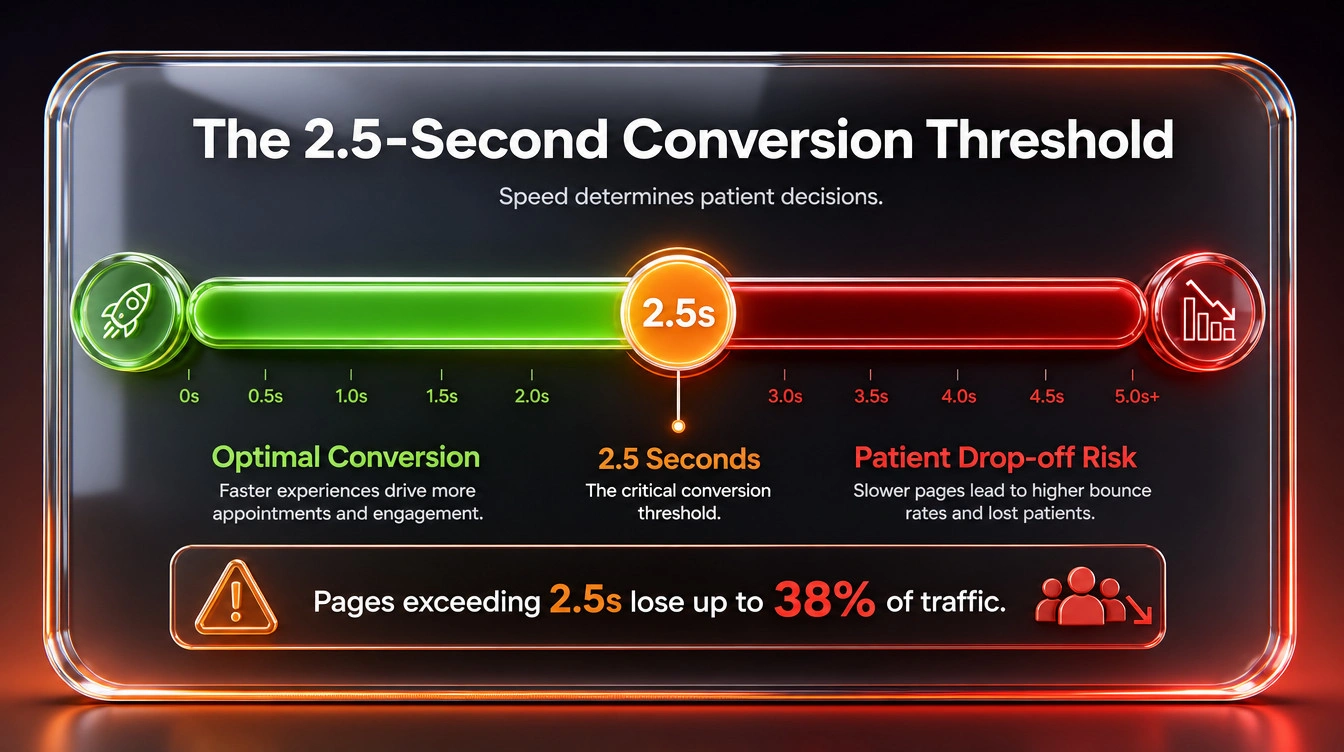
You must implement lazy loading techniques to ensure images only render when the user scrolls down the page. As we often explain to clients, why beautiful websites are broken for search engines usually comes down to unoptimised media files. A page that takes longer than 2.5 seconds to load will lose up to 38% of its prospective patient traffic.
Q: Why is my aesthetic clinic website loading so slowly?
A: Uncompressed clinical images are the most common culprit. Ulement implements advanced lazy loading and format compression to achieve instant loading speeds in Malaysia.
What is the Best Image Format for Clinical Photos?
To maintain the sharp resolution required for medical photography while keeping file sizes minimal, you must abandon legacy formats like JPEG or PNG. Next-generation formats provide superior compression without degrading visual quality.
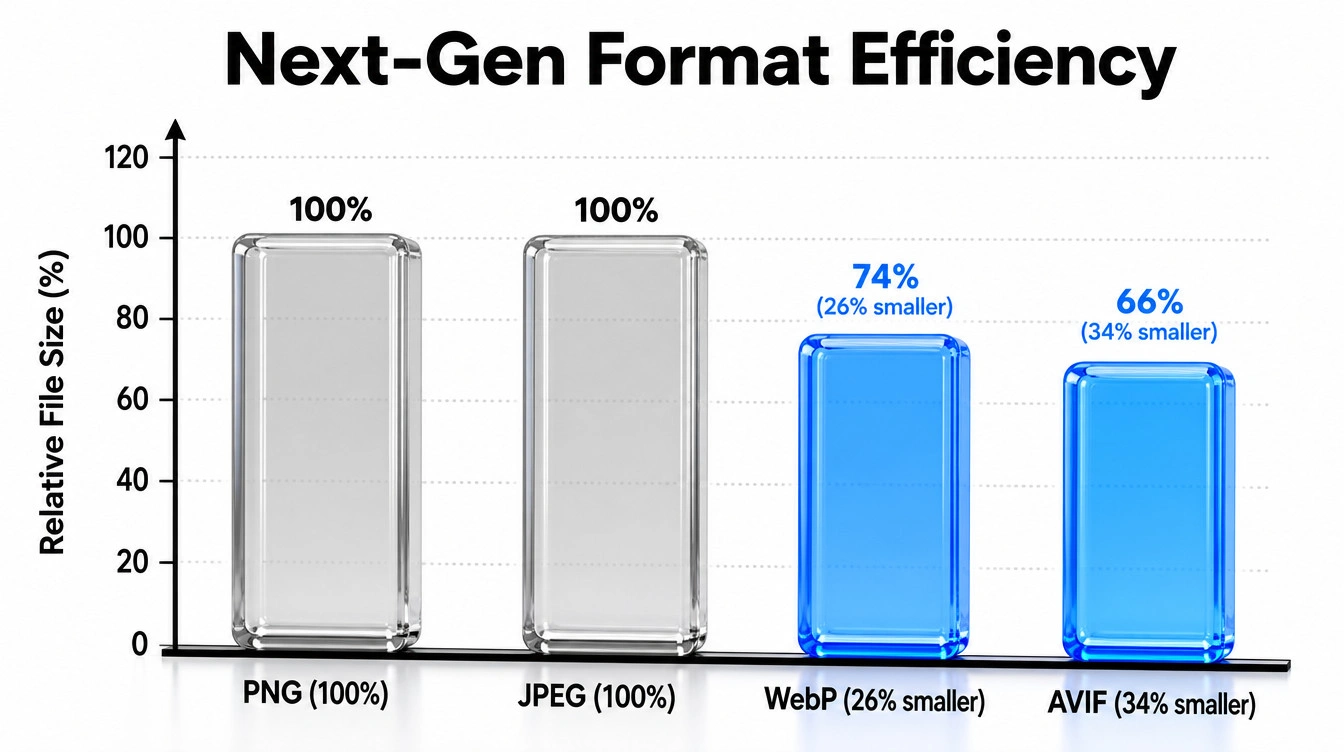
According to official documentation from Google’s Web.dev performance guidelines, WebP images are 26% smaller than PNGs and 34% smaller than JPEGs. For clinics investing heavily in visual proof, converting your entire media library to WebP or AVIF formats is a mandatory technical upgrade.
Q: Can we still use JPEGs for our before-and-after gallery?
A: Using JPEGs severely impacts your mobile page speed. Ulement strictly utilizes WebP and AVIF formats during our custom web development projects to guarantee high performance.
Building Topical Authority with LSI Keywords
Search engines use semantic relationships to verify your medical expertise. Stuffing the primary keyword “dermal fillers Penang” repeatedly into your text looks like spam. Instead, you must weave naturally related clinical terms throughout the copy to establish topical authority.
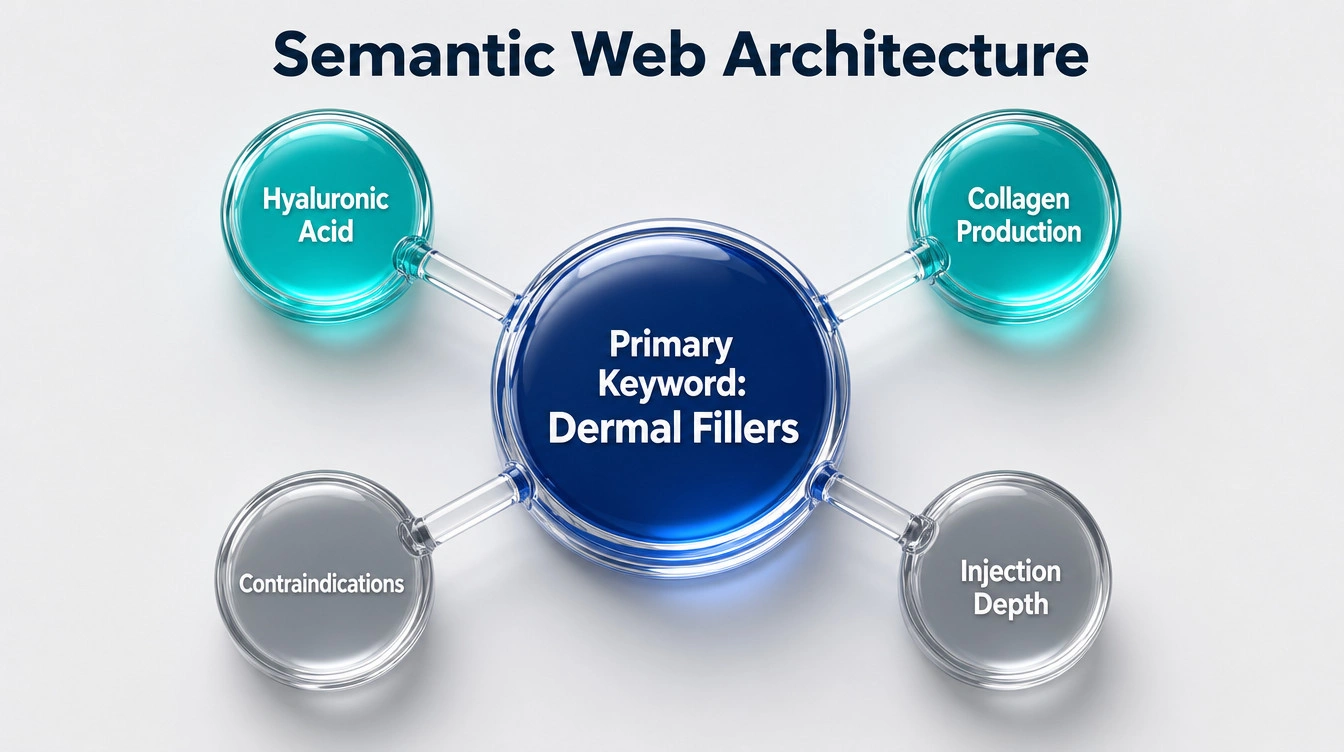
These Latent Semantic Indexing (LSI) keywords provide context. For a dermal filler page, essential LSI terms include “hyaluronic acid”, “collagen production”, “contraindications”, and “injection depth”. Including these terms proves to the algorithm that the content was written by a subject expert, not a generic content spinner.
Q: How many keywords should I put on a medical service page?
A: Avoid exact keyword counts. Ulement focuses entirely on semantic depth and topical relevance, ensuring your content covers the subject comprehensively without artificial repetition.
Structuring Recovery Timelines and Medical Disclaimers
Patient education requires transparency regarding what happens after the procedure. Search algorithms reward content that answers immediate post-treatment concerns. Structuring a clear recovery timeline prevents patient anxiety and reduces post-procedure support calls to your clinic.
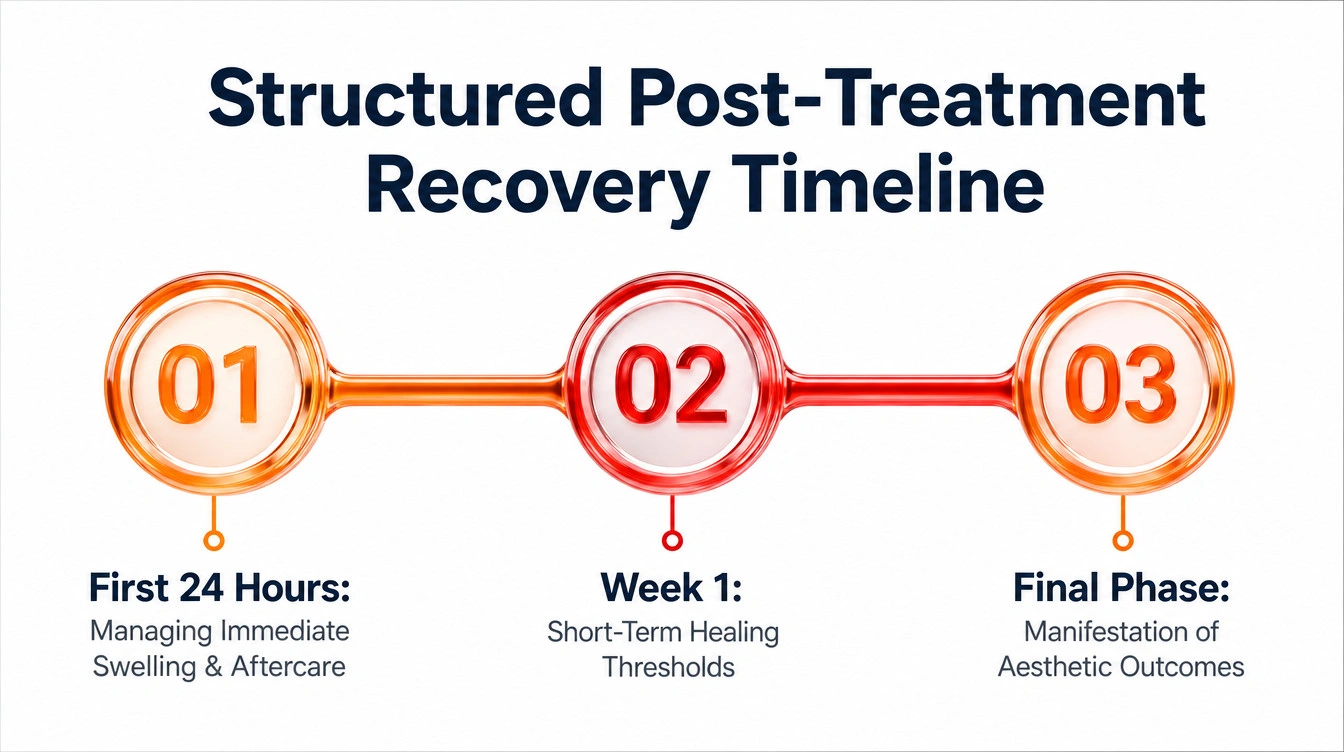
You must include standard recovery milestones to satisfy both user intent and local medical compliance. Outline immediate aftercare for the first 24 hours detailing swelling, define short-term recovery thresholds for the first week, and clarify when final aesthetic outcomes will manifest.
Actively Managing Your Clinic’s Reputation
As discussed in our Healthcare SEO Guide for Dental & Medical Aesthetics, a comprehensive digital strategy requires managing your online reputation actively. When building treatment pages, integrating patient reviews naturally helps highlight real-world validation. However, ensure that the testimonials you select focus on customer service, clinic cleanliness, and staff professionalism to keep your copy completely compliant with Ministry of Health rules regarding subjective clinical endorsements.
Q: Are recovery timelines necessary for non-invasive treatments?
A: Yes, setting clear post-care expectations builds immense trust. Ulement ensures all treatment pages include detailed, compliant recovery milestones to satisfy both patients and algorithms.
Frequently Asked Questions
Start Converting More Patients Today
Are your treatment pages generating traffic but failing to produce booked consultations? Your clinic deserves a digital presence that reflects your medical expertise.
Contact Ulement today for a comprehensive site audit and analysis to uncover exactly why your medical service pages are underperforming.